Lincoln Vital Signs was initiated by Lincoln Community Foundation under the leadership of then CEO Barbara Bartle. They brought leaders of Lincoln's public and private organizations, to gather information about our city’s strengths and challenges. Bartle recognized that we had information - held by many - and that if we brought it all together we would get a complete picture of our community.
On the Vital Signs website (click here) you can see individual reports about these areas:
- Community Profile
- Economy and Workforce
- Basic Needs
- Education
- Health
- Safety and Security
After the data was gathered and compiled, the question was . . . now what - what do we do with all of this information?
Representatives from businesses, nonprofits, faith communities, etc. all worked together to review the data and identify priorities: Early Childhood, Innovative Workforce, Affordable Housing, Strong Neighborhoods and Civic Investments.
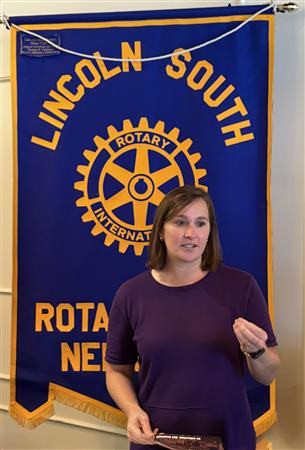
Amanda stated that population trends will be important in looking at future need for services and initiatives. The 65+ age group in Lincoln has grown 8X faster than any other age group - people moving to Lincoln is driving overall population growth.
Data continues to be collected and, now that we have 10 years of data, we can see trends.
Strengths of Lincoln include 1) highly educated workforce as well as new businesses / new jobs, 2) unemployment is one of the lowest in the nation and is currently lower than 2018, and 3) Lincoln is a safe community.
Amanda also shared some weaknesses that show in the data.
- Income adjusted for cost of living is not in line with other metropolitan areas
- Childcare costs continue to rise - currently about $12,000 per child per year; an increase of 35% since first data collected
- Though health overall is better than U.S. averages, deaths due to heart and cancer are approaching national rates; this may be due to aging population
Some additional specific 10-yeaar trends:
- Lincoln continues to have low unemployment, highly educated workforce, new business growth
- Neighborhoods in extreme poverty has reduced from 6 to 2
- Number of homeless has reduced (reduced from 900 to 500 over the 10 years)
- Covid impacted student scores during and immediately after; they are now recovering
- Low crime rate compared to other similar size communities
When looking specifically at our aging population, Amanda stated that there are nearly 46,000 adults age 65+ living in Lincoln - a 45% increase in the last decade. Of people moving to Lincoln, 7% are age 65+. Sadly 13% of older adults experience poverty - currently equating to about 6100 individuals.
Aging Partners is developing a community plan that will include housing, transportation and communications. There are also concerns about caregiving and social interaction - 1 in 3 are lonely leading to mental and physical health issues. We will hear from Randy Jones of Aging Partners at our meeting September 26.
The vision of Prosper Lincoln is prosperity for all – meaning a strong and growing community where everyone can reach their individual potential.
The mission of Prosper Lincoln is bringing people together to create community-based solutions.
Introducing Prosper Lincoln 3.0!
Comprehensive Early Childhood - Goal: All children are flourishing socially, emotionally, physically, and educationally. Child development from birth to age five includes physical, cognitive, language, social-emotional, and motor milestones that are crucial for learning and health. By providing a positive environment we can offset the affects of a child exposed to adversity and trauma. They will focus on the whole child - education, health, mental, social - not just childcare.
Amanda said there is a strong group working on the Childhood topic. An important aspect is to ensure there are sufficient spots for children rather than wait lists. Roughly 26% of all children in Lincoln - 4,391 - were enrolled in preschool. The costs are high - you can compare center-based childcare to the cost of UNL tuition - childcare is higher.
Housing - Goal: All residents live in quality housing they can afford.
Connections - Goal: All people thrive through community engagement and social connectedness.
Amanda shared that the next steps include pulling community groups together, set up some pilot programs and do testing, and host vital conversations and do community presentations.
We can help by identifying information that we see - such as gaps in what has been outlined. If we know someone who we feel would provide good input, get them connected. We can also sign up for the newsletter (click here for website) to keep up with progress and see where we may want to "jump in".
Contact Amanda Barker - 402.309.5350 or amandab@lcf.org