
On Friday October 11 our topic was gerrymandering. Our presenters were Kristin Pfabe of Nebraska Wesleyan University and Steve Dunbar retired from University of Lincoln - both mathematics professors.
We will be hearing a lot about redistricting in the next few years due to the 2020 census, which is a decennial event (every 10 years). The district lines will change in order to divide / apportion the 435 members in the U.S. House of Representatives.
The number of congressional districts in a state may shift based on increases or decreases in population over the previous decade, which affects congressional representation and state electoral votes. This reapportionment of seats in the House of Representatives and resulting change in electoral votes helps dictate the geographic shift in political power within the United States.
Within states, the congressional and state legislature districts are redrawn based on Census data. Based on population distribution changes within states, the boundaries must shift every ten years in order to ensure each district has roughly the same population.
Gerrymandering - simple definition - to manipulate the boundaries of (an electoral constituency) so as to favor one party or class.
The number of congressional districts in a state may shift based on increases or decreases in population over the previous decade, which affects congressional representation and state electoral votes. This reapportionment of seats in the House of Representatives and resulting change in electoral votes helps dictate the geographic shift in political power within the United States.
Within states, the congressional and state legislature districts are redrawn based on Census data. Based on population distribution changes within states, the boundaries must shift every ten years in order to ensure each district has roughly the same population.
Gerrymandering - simple definition - to manipulate the boundaries of (an electoral constituency) so as to favor one party or class.
With politicians approving the district lines, they are able to control the number of districts favoring each of the parties. Politicians are selecting the representatives rather than the voters selecting the representatives.
(The following images are from the internet but represent the same information that we received during our presentation.)
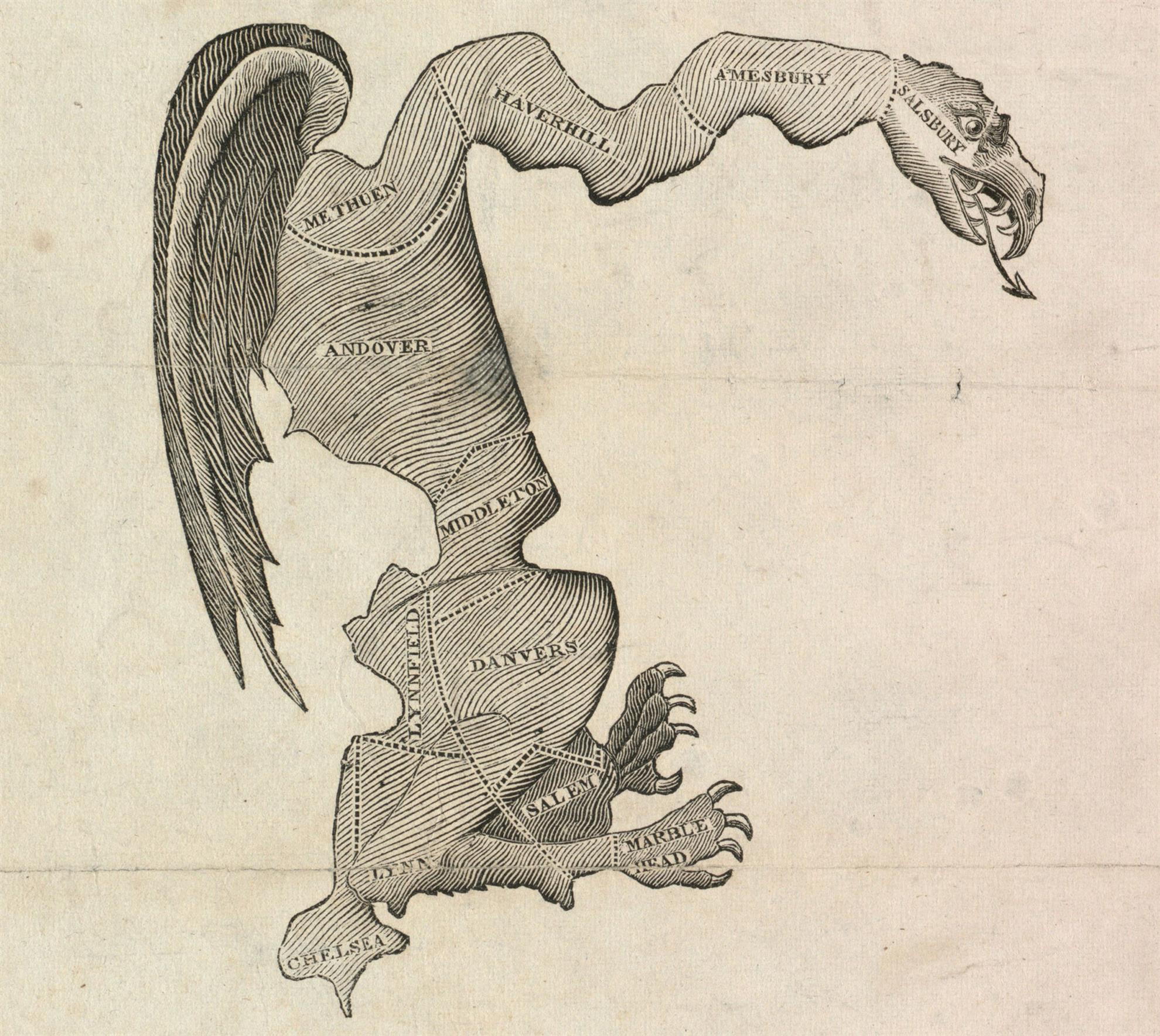 The origin of the term dates back to 1812. It was create in reaction to a redrawing of Massachusetts election districts under Governor Elbridge Gerry who signed a bill that redistricted Massachusetts to benefit his political party. When mapped, one of the contorted districts in the Boston area was said to resemble the shape of a mythological salamander.
Mathematically, we may look at determining districts as follows:
 In this sample we are displaying:
50 Precincts
60% Yellow
40% Green
We would anticipate that Yellow would win the vote.
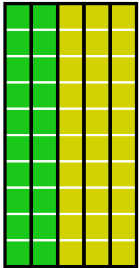 This is proportionate - the districts are even.
And, it is easy.
However we have only one party in each precinct.
The democratic process needs competition - some of each party in each precinct.
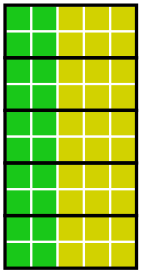 This one is also easy.
But, it is disproportionate.
There are more yellow in every precinct than green.
Yellow is likely to win every seat.
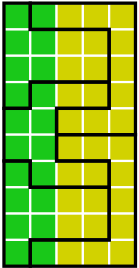 Here is another disproportionate review.
This is a good view of gerrymandering.
Even though there are more yellow voters overall, in this case green would win more precincts than yellow.
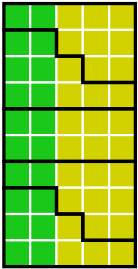 It would seem this is the best scenario.
It is proportionate - Green and Yellow win in proportion to their voting.
The process is complicated.
And the presenters were clear that their information was nonpartisan.
How has the process changed?
Before: there was no discernible or manageable standard for adjusting
Now: there are multiple measures of neutrality and fairness based on mathematical principles and statistical sampling
Changes: in June 2019 the Supreme Court declared that political gerrymandering was nonjusticiable at the federal level (so is up to the States)
Kristen and Steve pointed to the Metric Geometry and Gerrymandering Group as a resource https://mggg.org/.