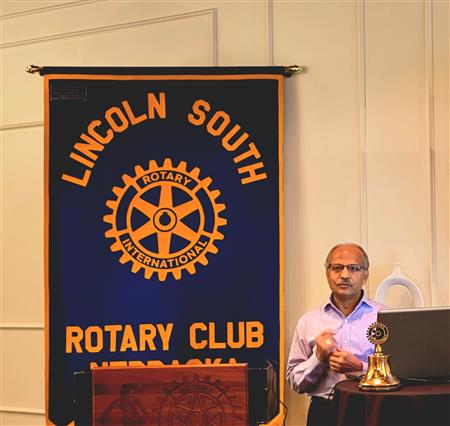
On September 22, 2023 at Lincoln South Rotary Club we heard from Dr. Asit K. Pattnaik, Professor of Virology. His topic was "Viruses and Pandemics: Can We Control Them?"
Dr. Pattnaik showed a document of all of the major outbreaks, endemics and pandemics that have been recorded.
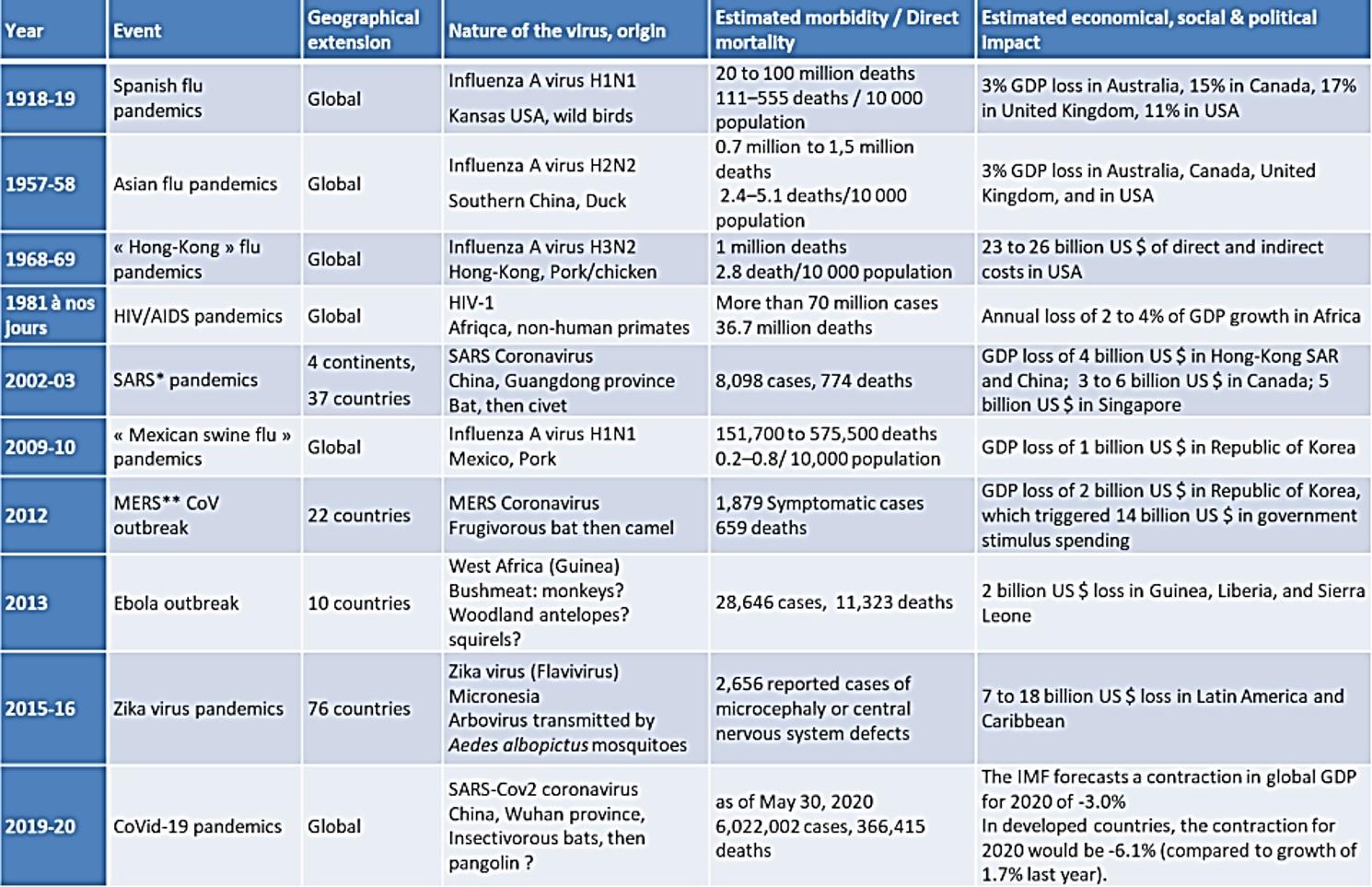 After giving a brief overview of the events, he focused on the Spanish Flu which he stated was the worst of them all. He shared that 20 to 40 percent of the population worldwide was impacted.
It is stated that there were nearly 500 million infections and 50 million deaths. He shared that record-keeping was not very accurate so some feel that there may have been nearly 100 million deaths. In the U.S. alone there were 675,000 deaths.
He said that one of the factors was that there were 3 waves - all within a 9 month period. It started in the spring-summer of 1918 with severe sickness but low deaths. The 2nd wave in the summer-fall of 1918 saw a high death rate. And the 3rd wave in the winter of 1919 also saw high death rates.He said the deaths came suddenly - a person could feel okay in the morning and then be dead by the evening.
There are different theories as to the origin but some feel it was biological warfare introduced by Germans. The virus was brought back to the U.S. by our troops returning after serving in Europe during WWI.
Asit shared some information about HIV/AIDS. In 2021, globally, there were 38.4 million people living with HIV. The good news is that there have been significant advancements in treatment so people are able to live longer with AIDS and can keep the disease from progressing.
He recapped the progression of SARS-CoV2 (COVID) which started in Wuhan in China. One of the first cases in the United States was in Seattle. But, then and entire cruise ship of infected individuals brought the virus. There is still much unknown about the exact original and some speculation of when it started and if it was accidental or deliberate.
The biggest issue was that many of those infected had no signs of being ill. So, they carried on their lives - among others - not knowing that they were spreading the disease. Eventually socially distancing, wearing masks, etc. helped reduce the spread.
Asit shared that, what we learned during earlier endemics and outbreaks paid off. We learned how to develop vaccines and reduce the spread from our previous experience.
Based on mortality rate (number of deaths / number of cases) he shared that the most dangerous viruses in the world are:
- Marburg virus
- Ebola virus
- Hantavirus
- Bird Flu virus
- Lassa virus
- Junin virus
- The Crimea-Congo fever virus
- The Machupo virus
- Kyasanur Forest Disease virus
- Dengue virus
And, the emerging viruses of the 21st Century are:
- SARS-CoV-2
- MERS and SARS-CoV-1
- Ebola and Marburg
- Zika Virus, Chikungunya virus, and Dengue Virus
We ran out of time to hear the rest of Dr. Pattnaik's presentation but, from his power point, he shared:
Research in the Pattnaik Laboratory at UNL focuses on:
- how viruses reproduce when they infect a host?
- how viruses cause disease in humans and animals?
- and develop vaccines and antivirals
He believes that we can possibly prevent and control a future pandemic by implementing global surveillance, rapid testing, pharmaceutical and non-pharmaceutical interventions, and accelerated vaccine development.
Professor Pattnaik completed Bachelor’s and Master’s degrees in Science in India. After receiving a scholarship, he went to Australia where he completed graduate studies and received Ph.D. in Virology. He subsequently moved to the United States to conduct post-doctoral research in Virology.
In 1992, he accepted a faculty appointment at the University of Miami Medical School where he continued research and taught medical and graduate students. He relocated to the University of Nebraska-Lincoln in 2002 where he continues to teach and conduct research.
He has been researching in the field of Virology for over 40 years. His research focuses on several human and animal viral pathogens to
understand how viruses invade and multiply in their hosts and cause disease. His research program has been funded by the National Institutes of Health (NIH), the United States Department of Agriculture (USDA), and other funding agencies. He has authored over 85 research publications in top ranked journals.