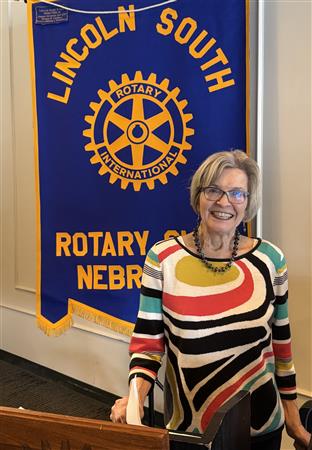
On April 17, 2026 at Lincoln South Rotary Club, we heard from Jenny Cardwell on the Environmental Conservation work they experienced while on safari in Africa.
Jenny shared her experiences traveling to Africa with friends and family. She stated that they spent a lot of time researching before landing on this trip that was in East Africa - Kenya and Tanzania. They were there for about 12 days and visited 5 different National Parks as well as many villages and other areas of interest.
Jenny's program was full of photos - of the people, the land and the animals.
She started with an overview of the countries. She pointed out that Africa is three times the size of the United States - including Alaska and Hawaii.
Kenya is home to wildlife like lions, elephants and rhinos. From Nairobi, the capital, safaris visit the Maasai Mara Reserve, known for its annual wildebeest migrations (click here), and Amboseli National Park, offering views of Tanzania's 5,895m Mt. Kilimanjaro.
Tanzania is known for its vast wilderness areas. They include the plains of Serengeti National Park, a safari mecca populated by the “big five” game (elephant, lion, leopard, buffalo, rhino), and Kilimanjaro National Park,
She listed these projects through Rotary International that support sustainable development in Kenya and Tanzania:
•Implement clean water and sanitation initiatives to reduce waterborne diseases.
•Provide educational resources and scholarships to enhance access to quality education.
•Promote health programs, including vaccination drives and maternal health services.
•Support economic development through vocational training and microfinance projects.
•Facilitate environmental conservation efforts, such as tree planting and wildlife protection.
•Collaborate with local communities to address food security through agricultural training.
Early in their trip they visited the Nariobi Elephant & Rhino Sanctuary. The David Sheldrick Wildlife Trust is the leading conservation organization in East Africa. The trust rescues and rehabilitates orphaned and injured elephants and rhinoceros. They have been hurt by either poachers, prey or other environmental factors. One of their projects is the Black Rhino Conservation Efforts hoping to increase the population to 2,000 by 2037.
This is a special place in Nairobi in the global fight against poaching and wildlife trafficking. The Ivory Burning Site is a symbol of Kenya’s enduring commitment to wildlife conservation. The site shows the country’s stance against the illegal ivory trade and its broader conservation efforts.
They visited the Giraffe Center to save the endangered Rothschild Giraffes in Kenya. When the center was established in 1979 there were only 130 and today there are 500. The Rothchild Giraffe is distinguished from other giraffes because of its coloring and horns.
While on safari they had degreed guides who were proud of their countries. As guests they had to be careful not to disturb the animals. It was important to wear neutral colors (for example blue can aggravate the animals). While driving through the parks it was important to stay calm - no loud talking or sudden movements.
During the very first game drive they were amazed. They saw Rhinos, Lion, Elephants, Zebras, Giraffes, Wildebeest, beautiful landscapes and and amazing sunset. They took a hot air balloon ride that overlooked the area giving a beautiful visual of the park.
They visited a volcano crater! The Ngorongoro Crater is 12 miles across. It offers a unique environment for some of the wildlife - a healthy environment for endangered species.
They spent some time visiting a nomad village. The people live in small homes. They move frequently - picking up everything to find a new grazing area for their goats and chickens.
Jenny shared a story of "talking showers" in the Serengeti Camp. They had a room at one camp - with shows - but no running water. To conserve water they had people that would actually "dump" the water over you while you were in the shower. They would ask if you were ready for your shower - pour water, allow you to "suds up" and then pour water over you to rinse. She also stated that the Serengeti Camp moved frequently leaving no trace behind.
An interesting event happened while they were in Kenya - when they ran into reporter Leslie Stahl who was doing an interview. They did not know what the program was about but later learned it was about US social media companies hiring Kenyans to sit in an office all day and watch violence and pornography to flag for their content.
We also got to see photos of, and hear stories about, stops that were not specifically about safaris, the environment or conservation.
Jenny showed us some jewelry that was hand made from clay beads and painted. There was a small basket made by women in a village they visited. We also saw a beautiful wind chime made through the Shanga program (empowers, trains, and employs Tanzanians with disabilities, offering them a sustainable livelihood).