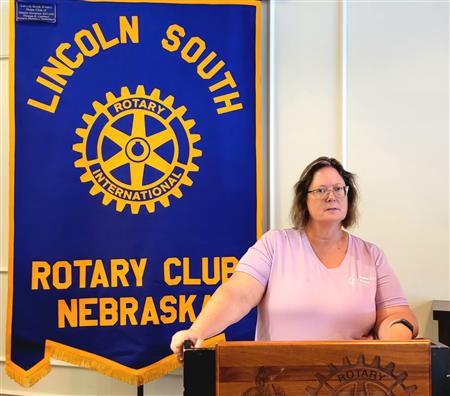
Leigh Esau is a little shy when it comes to sharing her story. She’s not actually a shy person, but telling her own story just isn’t her thing.
Leigh is the founder of the Foster Care Closet in Lincoln. It’s a place where foster kids can get brand new clothes during and before they go to a foster home. She has served thousands of kids in the foster care system with clothing. The Foster Care Closet has been open in Lincoln for 10 years and now has a location in Omaha and is opening two more in Scottsbluff and Kearney.
Leigh’s goal is to take her model and make it a national standard for foster kids across the country, because these kids are often the ones left behind, she said.
Before she was 1, Leigh was placed in a foster home. Her home-life was chaotic and unstable and she went back and forth between her foster home and biological home for the first three years of her life. She was found abandoned at age 3 and was in foster care for another few years before being adopted by a family in a rural town in Colorado at the age of 7.
At the age of 14, Leigh said she boldly talked about growing up and being a foster parent in the way that most kids talk about wanting to be a teacher or firefighter. It was on her radar and heart.
When Leigh met her husband, Pat, at the age of 15 she said she knew they would get married. She called him up, asked him out and three years later they got married.
The young couple moved to California and then settled in Lincoln where they raised their children. Leigh said it’s when they became foster parents that they quickly noticed how few belongings children had when they showed up at their house.
When she and her husband took in a foster child, they’d rush out to the store to grab diapers, clothing, formula, shoes, car seats and whatever they needed. It was expensive and also sad that they couldn’t spend that time investing in the child who had just walked through their door.
Leigh began talking with friends about how to fix this problem. She started taking second-hand items from people to use herself or pass along to other foster parents who could use them. This was the start of the Foster Care Closet, and a year after Leigh started collecting clothes they moved operations to a storage facility and then an official space. By 2008, the Foster Care Closet was in its current 3,200-square-foot location.
But the Foster Care Closet has far extended Leigh’s original idea of gathering clothes, toys and diapers.
“This is my favorite part of the whole place,” said Leigh as she flicked on the lights.
It was like an apartment. There was a big living room, an office area, bean bag chairs, toys – it felt like a home, which is exactly the point.
In 2012, Leigh added an intake center to the Foster Care Closet. This space above the shop is where kids and caseworkers can hang out after the child is removed from their home and before they go to their foster home.
It’s a step toward making this traumatic process smoother and more comfortable for kids while they’re waiting to move to a foster home, Leigh said. The kids can eat, pick out five new outfits to take with them, watch TV, play or just sit down and take a breath.
These seemingly small details matter to Leigh, because they matter to kids. She’s witnessed tired and confused teens light up when they go to pick out new clothes, because they know they won’t have to go to school the next day wearing the same outfit. She’s seen other kids start to trust adults just because she brought them a snack.
“I can’t change the system, but I can change how kids are introduced to foster care,” Leigh said.
One of the reasons Leigh said she doesn’t like to share her story is because people often assume she works with foster kids because she is a former foster kid, but that’s not true. Leigh said it’s less about her own experience than it is about the kids she’s seen walk through foster care.
She is convinced the process can be better, that kids can have dignity and a voice despite their circumstances.
That’s why she does her work. Why she’s checking prices, folding clothes and looking for sales at Old Navy and Sketchers. It’s why she’s buying a new round of jeans in the off season and stocking up on bulk bundles of socks and undies. It’s for the kids whose stories have rubbed off on her, who have made her own story richer and somehow stronger because of their courage and resilience.
Because for Leigh, her story matters most when it’s about making their stories heard.