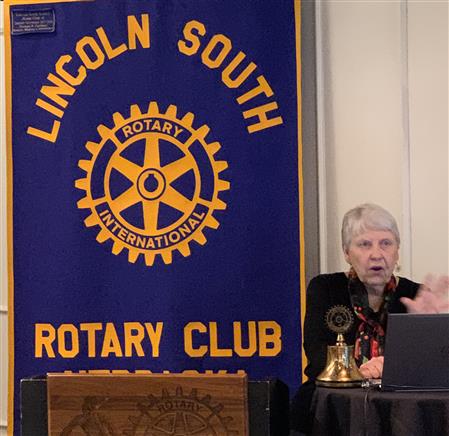
On December 15, 2023, Lincoln South Rotary Club heard about Creche Collecting - Custom and Culture from Joyce Michaelis.
Everyone in attendance had the opportunity to see a bit of Joyce's collection on display.
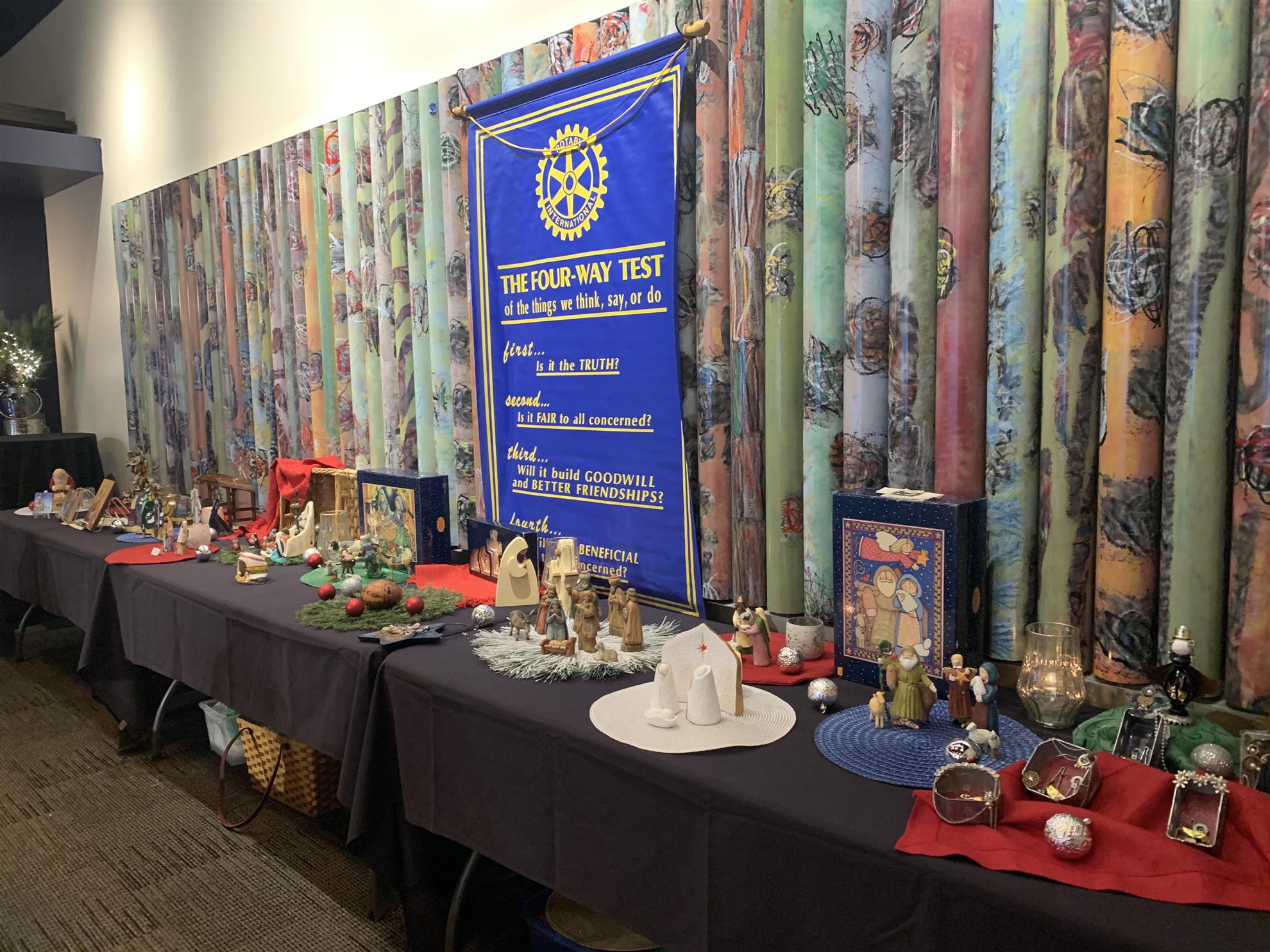
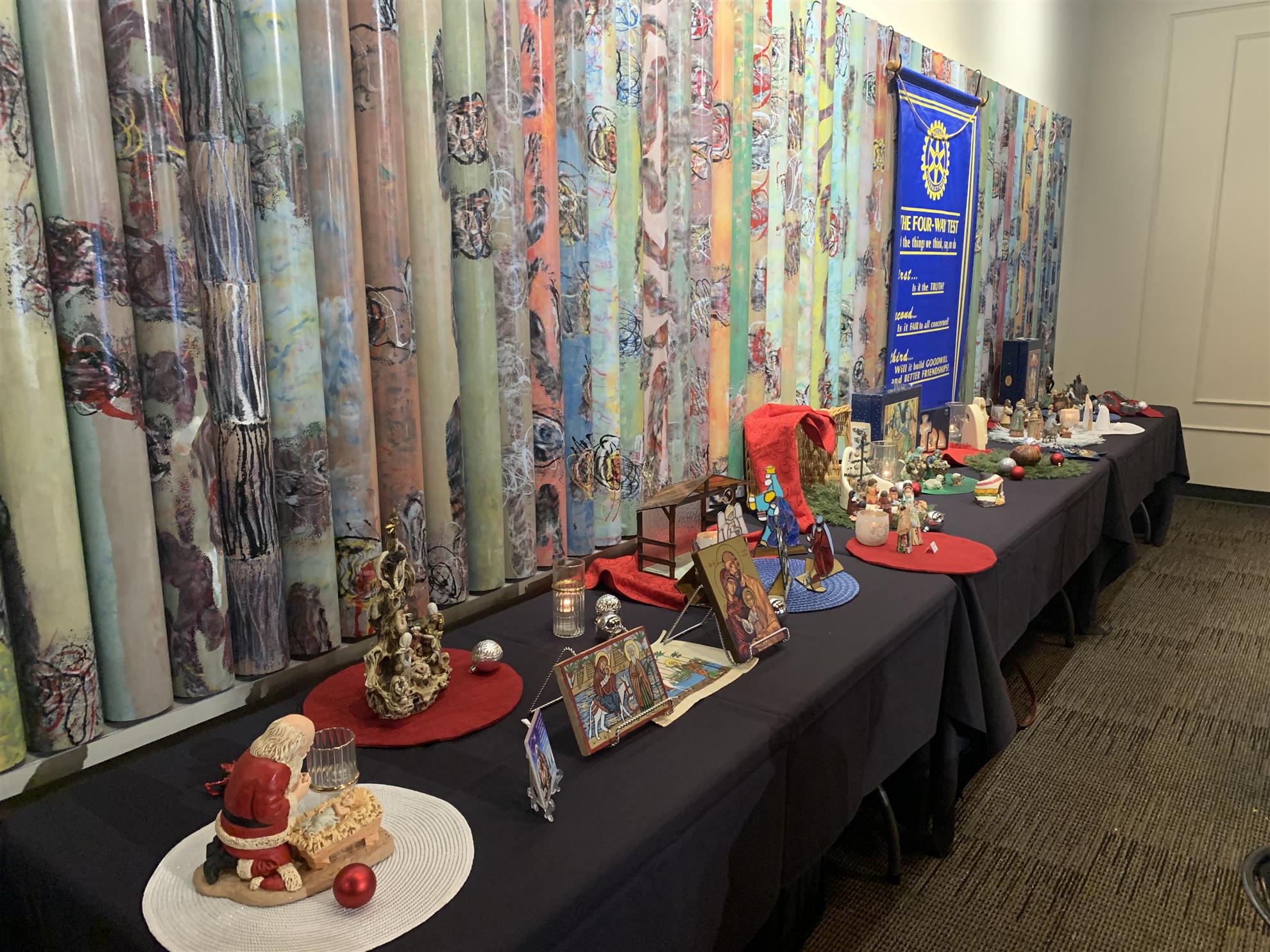
This presentation cannot be written up with mere words - you need to see the photos. Some of the photos in this article are of Joyce's collection while others represent the information that Joyce shared. At the end of the story there is a link to view all saved photos.
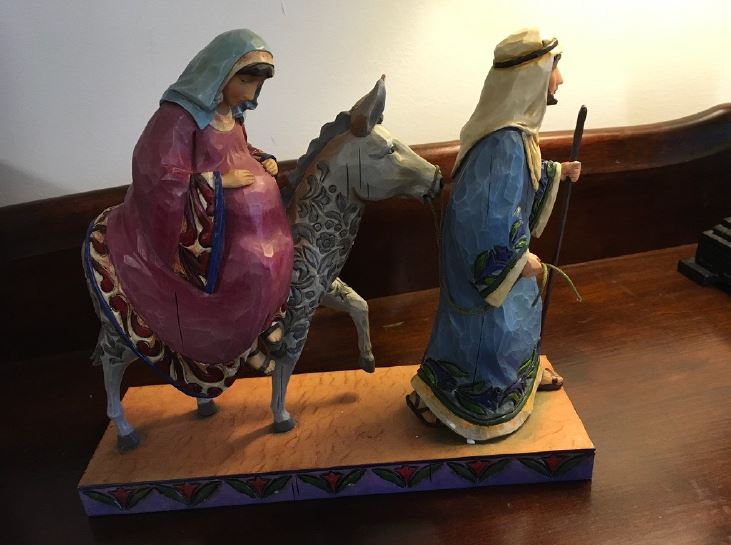 Joyce commented that there is truly a great deal of information written about nativity scenes but a general definition is a 3 dimensional object that portrays the trip to Bethlehem, the manger scene, and the flight to Egypt due to King Herod's declaration to execute any male child in Bethlehem.
Her presentation focused a lot on culture. She stated that here we traditionally give a gift on December 24 or 25 in celebration of Christmas. But, in a number of cultures they give their gifts on January 6. That is the day that the three kings - the magi - were said to have arrived in Bethlehem.
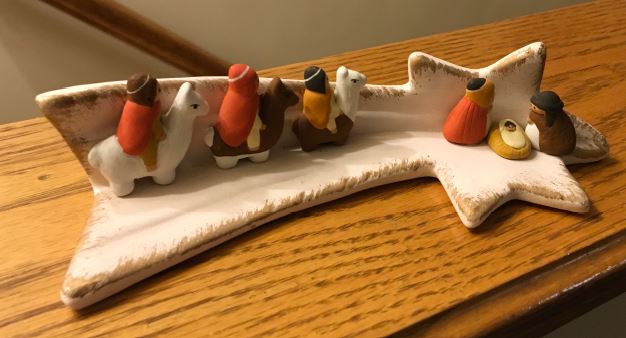
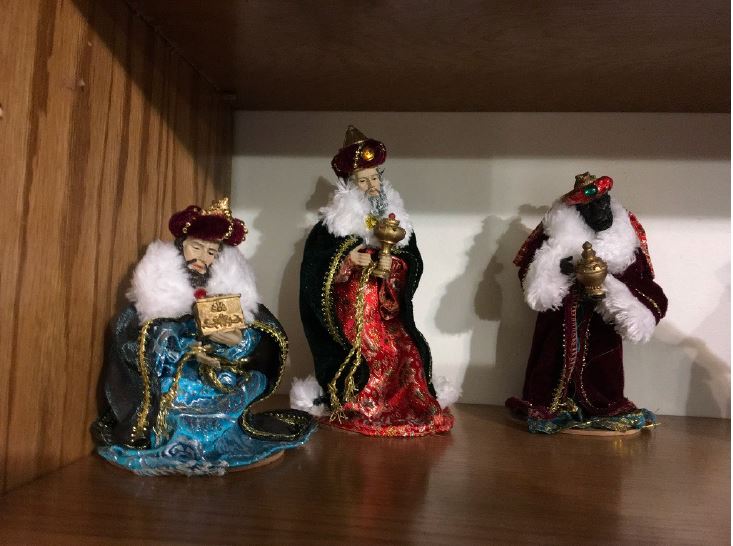 Through research Joyce learned that there is uncertainty as to how many wise men really arrived. But it is accepted that there were three known areas of the world at the time - Europe, Asia and Africa. Often the wise men were crafted to represent those three areas in appearance.
Joyce pointed out the portrayal of Joseph and Mary. History indicates that Mary is likely about 14 or younger while Joseph is much older. Joseph had a family but this type of relationship was acceptable in those times.
She shared that the animals depicted in the nativity scene may be the animals that they have where they live - not necessarily what may have been in Bethlehem. For example, in Africa we may see lions and zebras, in Alaska they may include moose and bear.Also culturally determined may be birthplace as well as what people are wearing.
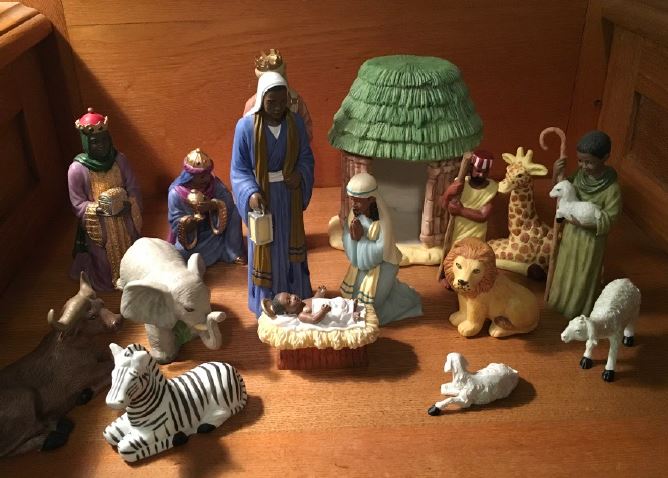
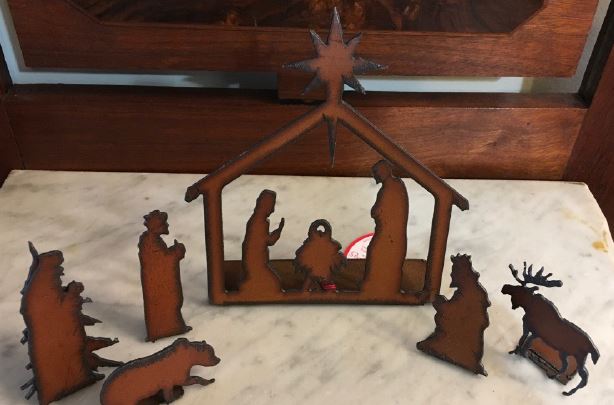
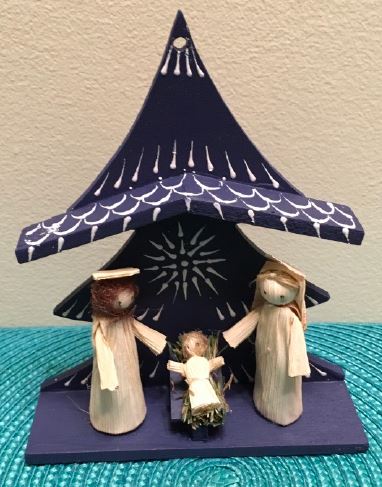
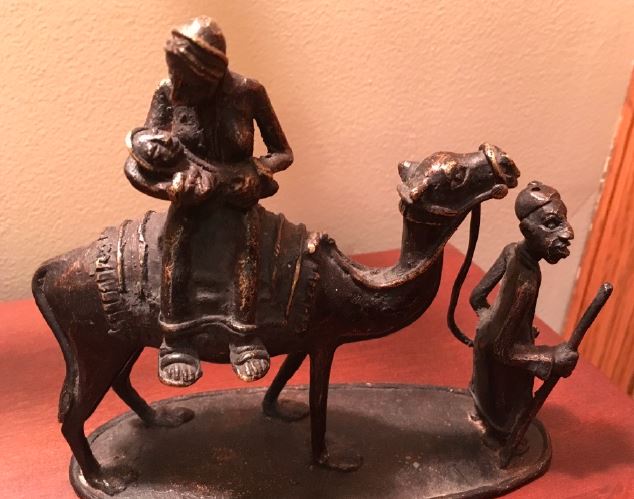
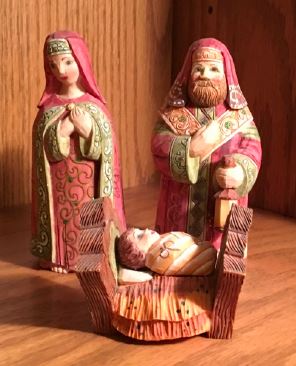
Another piece of the nativity scene is the star - which provides communication and light - spiritual and physical. We are told that the camels and wise men came by the guidance of the star. Sometimes the nativity scene reflects the importance of this element. The angel is the messenger and protector of the holy family. Nativity scenes often show a sheltering angel.
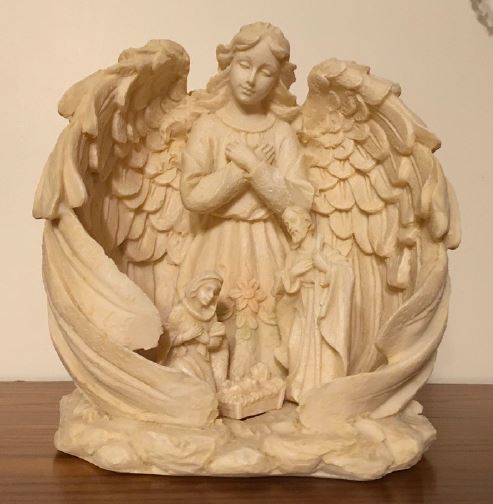
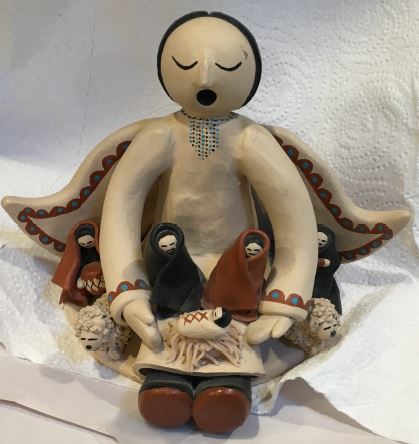
Joyce shared the picture of one of her favorite nativity scenes - a Pueblo Indian nativity scene. It is a story teller which is a sheltering angel. She is sheltering the holy family while telling the story.
Around 1700 nativity scenes became an art form in Italy. An interesting fact is that they did not depict the nativity as it was at the time it occurred, but rather contemporary (1700) art. The movement swept across the world and we saw a number of examples provided by Joyce.
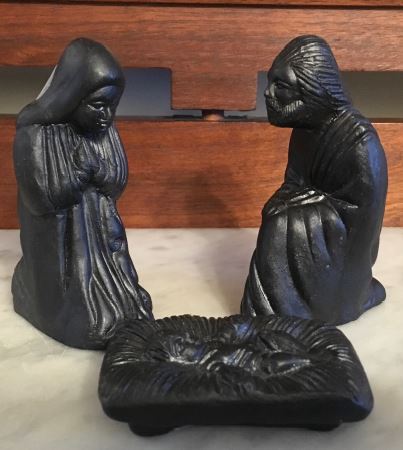
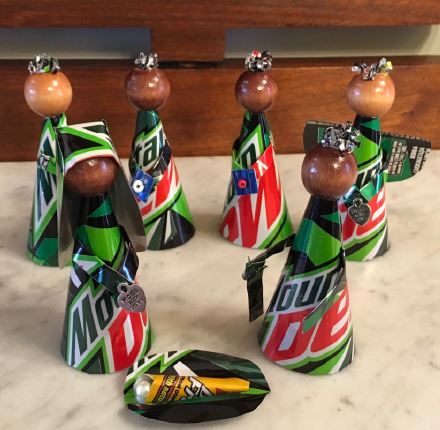
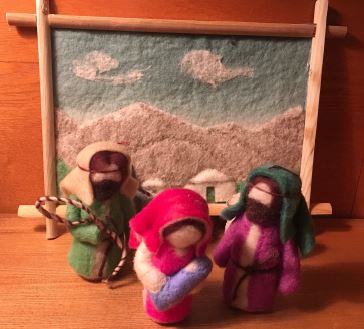
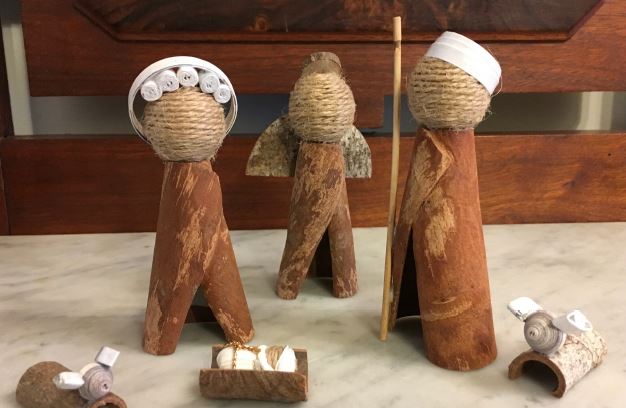
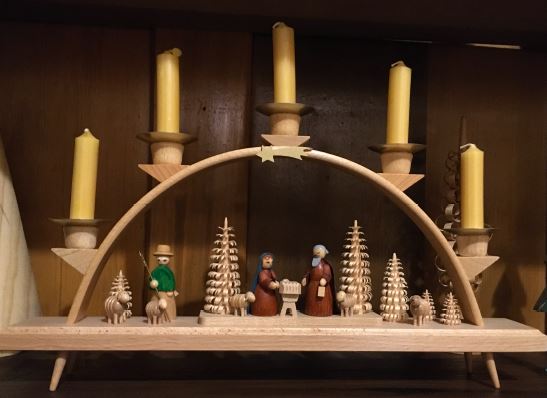
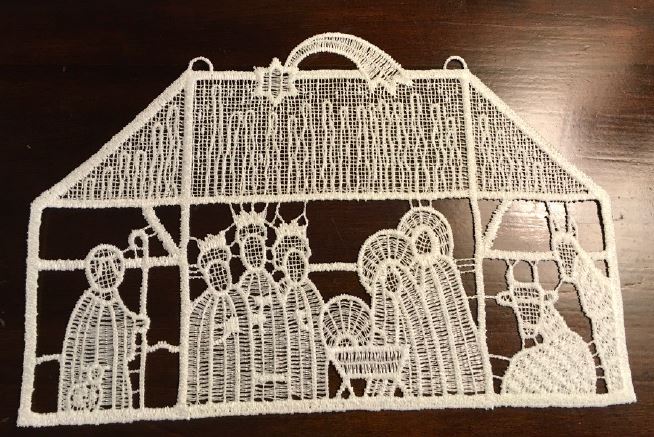
Another item that Joyce pointed out is the positioning of Joseph, Mary and the Child.. We may be seeing some cultural impact of our current times - reflecting our current relationships. Traditional nativities often have Mary shorter, kneeling near the Child and Joseph appears dominant in a standing position. However there are some samples where Mary and Joseph are the same height and equal distance from the child.
When Joyce was in Egypt. She saw a map of the travels of Mary, Joseph and the Baby after they fled Herod. History indicates that they were there probably 3 years. The Egypt tourism industry hopes to determine the route and provide the opportunity for people to travel that same route when they visit.
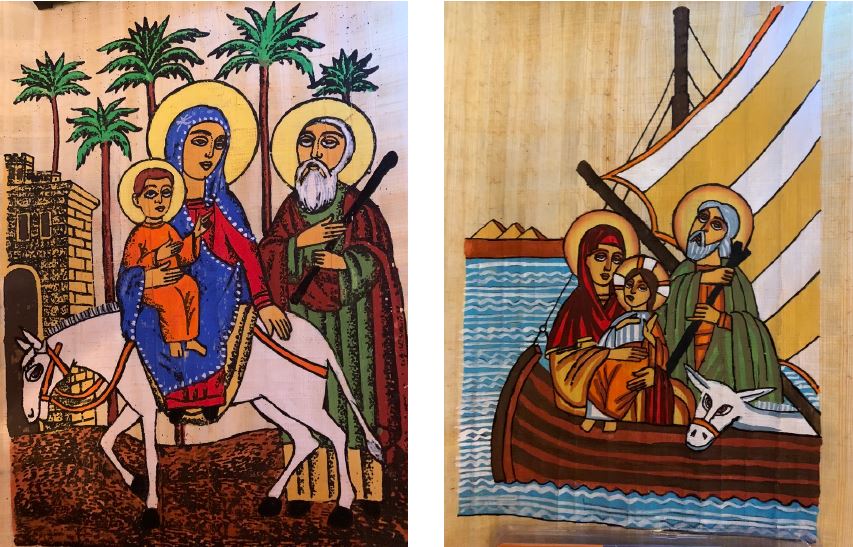 A small percentage of the Egypt population are Coptic Christians who tend to be 2-dimensional in their representations of the nativity scene. So, rather than seeing figurines, you will see paintings. In all you will see the desert, pyramids and the Nile River are a component. She shared a rare image of the holy family in a boat.
Joyce has been interested in learning more about Nebraska artists who create nativity scenes. She shared the work of Sharon Sykes (a guest in attendance) who does steampunk art. She asked if we now of local artists that do nativity scenes to share that information with her.
To view all of the photos saved from the presentation - click here.
Joyce was introduced by DeEtta Vrana:
Joyce taught Spanish, Latin American literature and Hispanic Film for 44 years at Nebraska Wesleyan University. She became interested in nativities when she saw her son-in-law's grandmother's collection. Joyce has traveled extensively and she would look for nativities and gained an interested in how they reflected culture. Having an academic nature, she enjoyed researching the aspects of the nativity - history and culture.