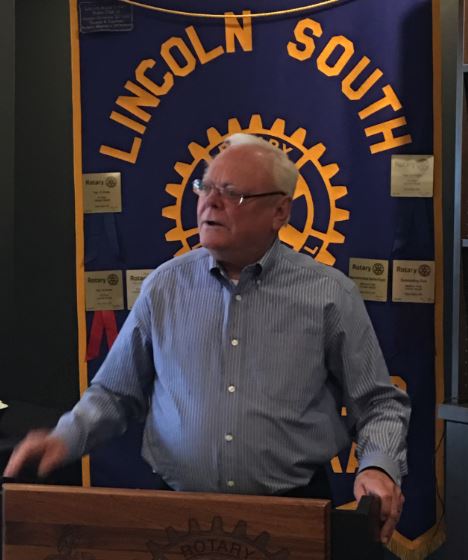
Dick reminded us that when he entered the Army was a turbulent time - our involvement in the Vietnam war was not popular - but the experience provided him with good leadership skills.
He chose to enlist so that he could have more control over his job classification than if he got drafted.
Upon graduating from basic training at Fort Lewis in Washington he learned that he would be going to Vietnam. He was offered a position as a green beret which did not interest him. And, he also had the opportunity to go through training to become an officer but he would not have a choice of his MOS. So he declined.
His chosen MOS (job classification) was quality control analyst. there were only 80 in the entire army. His unit was responsible for testing roads, gun paths and landing strips - anything dealing with asphalt and soils. His interest came from his background in the nursery business - dealing with soil. nearly everyone else in the unit had engineering backgrounds which made his view unique.
Though he quickly adapted to the day to day life in the Army it wasn't easy. Christmas was very lonely that year. He recorded tapes to send home to his wife but it was difficult to have a one-way conversation.
His commanding officer was not like many - he appreciated the experience of the men and respected their work and ideas. A recommendation that Dick provided was implemented which had a major impact on how they built and maintained roadways. Rather than tearing up old ones and rebuilding, they used the existing surfaces as a base to build upon.
The US Army worked with indigenous hill people of Vietnam. Their status among others in Vietnam was elevated due to the support of the US Army.
The life lessons from Dick's Vietnam experience included:
- leadership from his Colonel - that it is okay to rely on the expertise of the team; tell them the results that are needed and let them figure out how to best accomplish the goal
- knowing who to trust - how the US Army and Vietnamese interacted, who to trust within the Unit